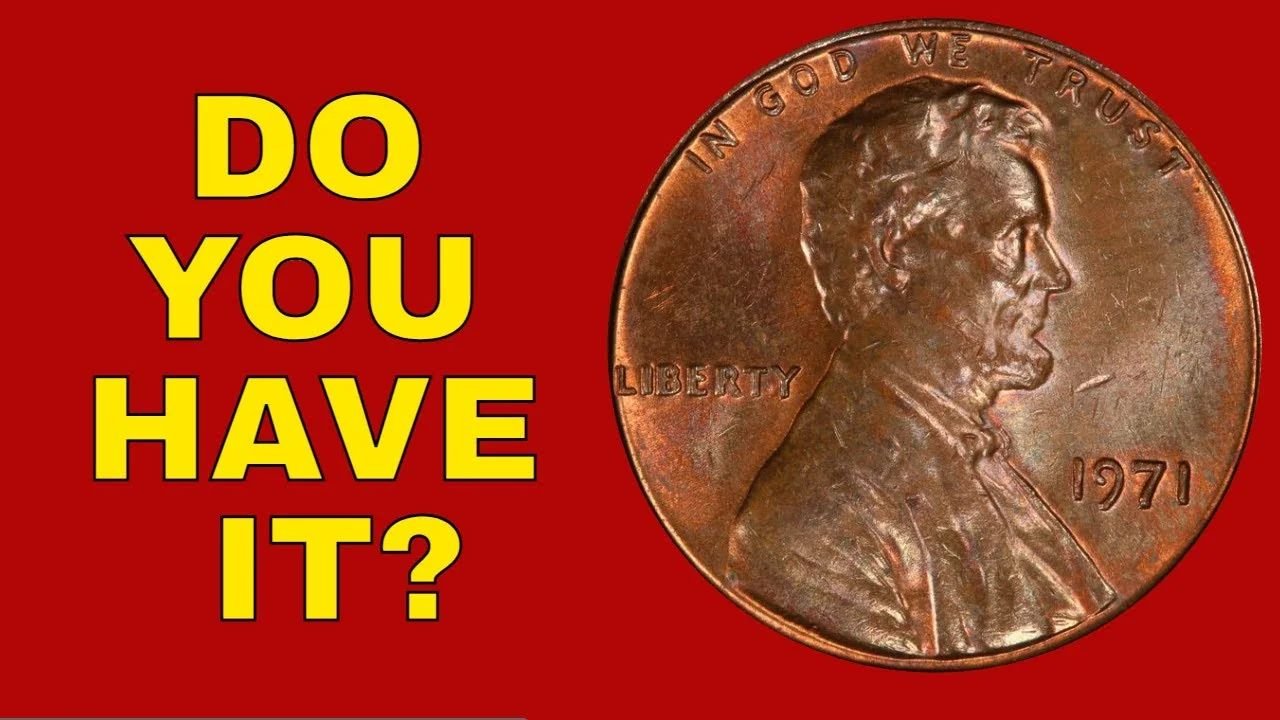

Imagine reaching into your pocket for loose change and discovering a coin that could change your life. Not a lottery ticket, not a stock certificate — but a simple penny. Sounds unbelievable? Not when it’s a rare Lincoln Wheat Penny, which some claim could be worth a staggering $21 million. In the world of coin collectors, this kind of discovery isn’t just a dream — it’s a possibility worth exploring.
What Is the Lincoln Wheat Penny?
The Lincoln Wheat Penny, affectionately known as the “Wheatie,” was introduced in 1909 to commemorate President Abraham Lincoln’s 100th birthday. It was the first U.S. coin to feature an actual person. The obverse side features Lincoln’s profile, while the reverse shows two stylized wheat ears — hence the nickname.
Minted until 1958, the Wheat Penny was then replaced by the Lincoln Memorial design. While millions were produced and most are worth only face value or a few cents, certain rare versions are worth significantly more — and one specific variation is rumored to be worth up to $21 million.
The $21 Million Penny – Fact or Fiction?
In collector circles, stories abound about a Lincoln Wheat Penny worth $21 million. While this specific value hasn’t been confirmed in a public sale, the legend likely stems from a rare convergence of:
- Minting error (such as a 1943 copper or 1944 steel strike)
- Unique year and mint mark (like 1909-S VDB)
- Perfect condition (graded MS-70)
- Or possibly, a prototype mistakenly released into circulation
One of the most well-known high-value Lincoln Wheat Pennies is the 1943 copper penny. During World War II, the U.S. Mint produced pennies in steel to conserve copper. However, a few copper blanks were mistakenly struck and released — and today, these have sold for hundreds of thousands, with some private sales rumored to approach or exceed $1 million.
Could one fetch $21 million at auction in the future? Possibly. Rarity, condition, and collector demand are the key factors driving such sky-high values.
Could a $21 Million Lincoln Wheat Penny Still Be in Circulation?
The chances are slim, but not zero. Rare coins have been discovered in:
- Inherited collections
- Coin jars or sock drawers
- Coin roll hunts
- Pocket change
So yes — a valuable Lincoln Wheat Penny could still be out there, waiting for a lucky finder to realize its true worth.
Also Read – The Lincoln Wheat Penny Valued at $144K, Still in Circulation?
What Makes a Lincoln Wheat Penny Valuable?
Not all Wheat Pennies are created equal. Here are some features that could signal high value:
1. 1943 Copper Penny
Should have been made from steel; only a few copper versions exist.
2. 1944 Steel Penny
Should have been made from copper; another war-era mistake that’s extremely rare.
3. 1909-S VDB Penny
First edition from the San Francisco Mint. The “VDB” initials (for designer Victor David Brenner) were quickly removed from future designs.
4. Doubled Die Errors
Look for doubling in letters or numbers, particularly on “LIBERTY” and the date.
5. Uncirculated Condition
Coins with no wear and a sharp strike (graded MS-65 or above) are far more valuable.
Lincoln Wheat Penny in Numismatics
In the world of numismatics, the Lincoln Wheat Penny holds a special place. It’s often the entry point for new collectors and remains a cornerstone of U.S. coin history. Whether for sentimental value or serious investment, Wheat Pennies are among the most widely collected coins in the United States.
Some Wheat Pennies are regularly bought and sold for hundreds or thousands of dollars, depending on the date, mint mark, and condition. So while most won’t be worth millions, certain examples can still provide a significant return.
How to Identify a Valuable Lincoln Wheat Penny
Here’s a quick checklist to help you determine whether your Wheat Penny might be valuable:
- Date: Look for rare years like 1909, 1914, 1922, 1931, 1943, and 1944.
- Mint Mark: “S” for San Francisco and “D” for Denver; placement and condition matter.
- Condition: Mint-state coins (MS-60 and higher) are most desirable.
- Errors: Doubled dies, off-center strikes, and planchet errors add major value.
- Material: Is your 1943 penny made of copper? You might want to get it verified.
Could a $21 Million Lincoln Wheat Penny Appear Again?
While no known Lincoln Wheat Penny has officially sold for $21 million, the possibility of an ultra-rare prototype or error penny surfacing remains. With growing interest in collectibles, coins are increasingly seen as alternative investments. This increases demand — and potentially, future valuations.
Coin dealers, collectors, and auction houses are always on the lookout for new discoveries. If someone stumbled upon a one-of-a-kind coin in pristine condition with historical provenance, it could command an astronomical price at a major auction.
Tips for Coin Collectors and Curious Finders
If you think you’ve found a rare Lincoln Wheat Penny, follow these steps:
- Don’t clean the coin — it can damage its surface and reduce value.
- Check the date and mint mark.
- Look for oddities or errors like doubling, odd materials, or missing elements.
- Use a coin scale to confirm weight (helps identify copper vs. steel).
- Have it graded by a professional coin grading service like PCGS or NGC.
Final Thoughts: A Penny Worth a Fortune?
The mystery and allure of a Lincoln Wheat Penny potentially worth $21 million captivate collectors and casual hobbyists alike. Whether or not such a coin exists, the stories continue to inspire treasure hunts in loose change and dusty coin albums across America.
So the next time you find a Lincoln Wheat Penny, don’t dismiss it. Check it carefully. You just might be holding the most valuable coin in history.
FAQs About the Lincoln Wheat Penny
Q: Is there really a Lincoln Wheat Penny worth $21 million?
A: There’s no confirmed public sale at that value, but rare examples like the 1943 copper penny have sold for hundreds of thousands.
Q: What makes a Lincoln Wheat Penny valuable?
A: Rarity, minting errors, special dates (like 1909-S VDB or 1944 steel), and high grading.
Q: Could a valuable Wheat Penny still be in circulation?
A: Yes, rare coins have been discovered in jars, collections, and everyday change — sometimes decades after they were minted.
Q: How can I get my Wheat Penny appraised?
A: Contact a certified numismatist or grading service for evaluation and certification.
Some Important Link
| Download News APP | Click Here |
| WhatsApp Group | Click Here |
| Home Page | Click Here |