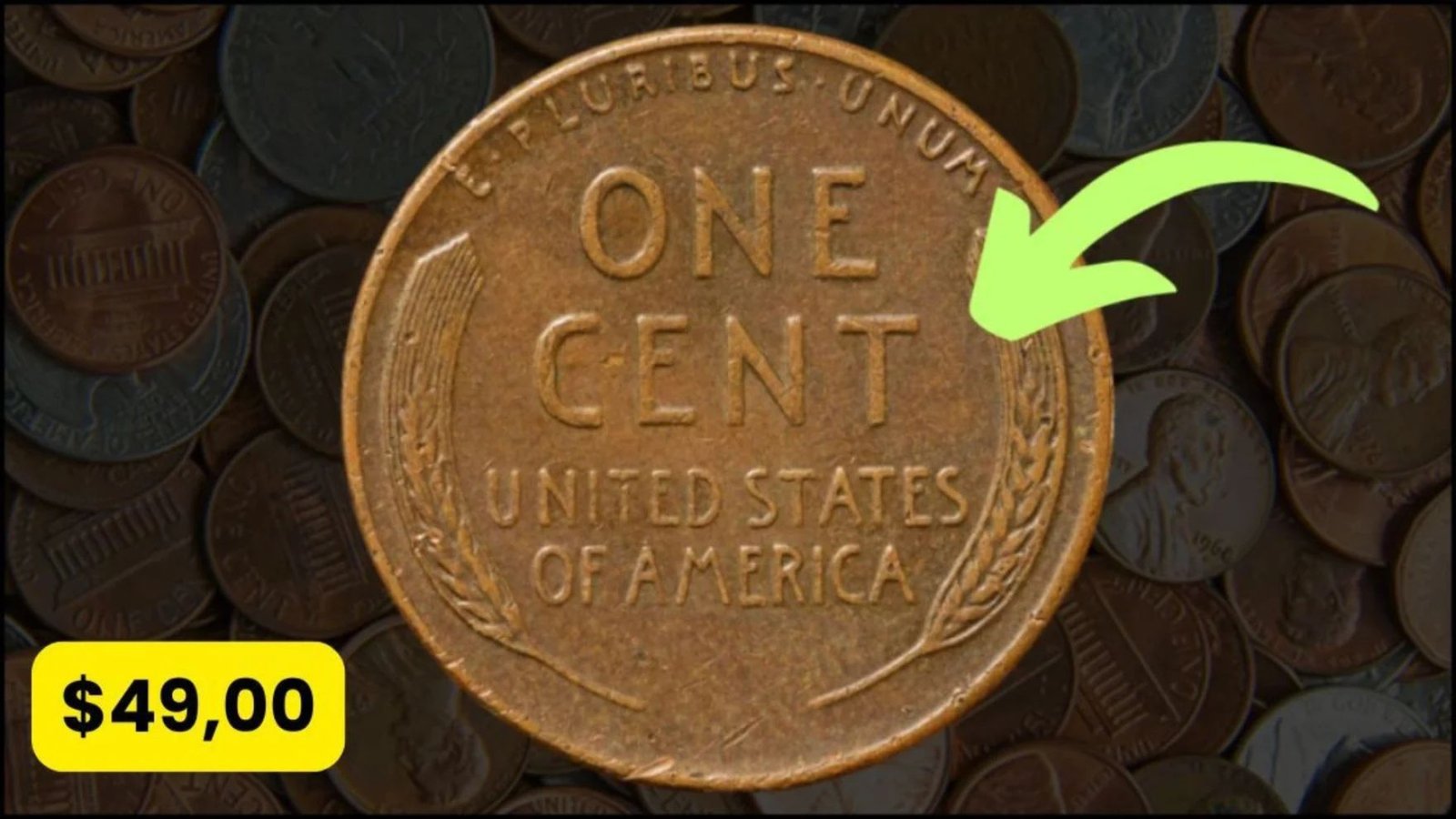

In the vast world of coin collecting, some of the most surprising treasures aren’t always made of gold or silver. Sometimes, they’re hiding right in your loose change — unassuming, everyday coins that carry staggering value due to history, rarity, or minting errors. One such coin is the Lincoln Wheat Penny, a piece of American numismatic history that, in rare cases, has sold for as much as $49,000. Yes, you read that right — a coin once used to buy candy could be worth more than a luxury car today.
So, how did the humble Lincoln Wheat Penny become such a sought-after collector’s item? Let’s dive into the details of what makes these coins so special, what you should look for, and whether one might still be hiding in your pocket.
A Penny Rooted in History: The Origins of the Lincoln Wheat Penny
The Lincoln Wheat Penny was first introduced in 1909 by the United States Mint to commemorate the 100th birthday of President Abraham Lincoln. It was the first U.S. coin to feature a real historical figure rather than the traditional Liberty symbols, marking a turning point in American coinage design. The obverse featured a bust of Lincoln, designed by sculptor Victor D. Brenner.
What set this penny apart visually — and gave it its nickname — were the two wheat stalks engraved on the reverse side. This design element was intended to symbolize prosperity and agriculture, two fundamental pillars of the American identity at the time.
These Lincoln Wheat Pennies were minted from 1909 through 1958, after which the design was replaced with the Lincoln Memorial reverse in 1959. Over that half-century, billions were minted, but only a select few carry significant monetary value today.
Why Are Some Lincoln Wheat Pennies Worth Thousands?
Not all Lincoln Wheat Pennies are valuable, of course. Most are worth just a few cents to a few dollars depending on condition. But a handful of them — due to production quirks, limited mint runs, or simple mistakes — have become treasures to collectors and investors alike.
Two particularly valuable versions of the Lincoln Wheat Penny have captivated collectors for decades:
1. The 1943 Bronze Lincoln Wheat Penny
In 1943, due to the demands of World War II, the U.S. Mint began producing pennies using zinc-coated steel instead of copper. The switch was made to preserve copper for military uses, such as ammunition and communication wiring. However, in a rare mishap, a small number of bronze planchets from 1942 remained in the minting machines and were accidentally struck with 1943 dies.
These extremely rare 1943 Lincoln Wheat Pennies made of bronze are among the most valuable coins ever discovered. In recent auctions, some have sold for as much as $49,000 — and others, in pristine condition, have even crossed the six-figure mark.
2. The 1955 Doubled Die Lincoln Wheat Penny
Another highly collectible variant is the 1955 doubled die Lincoln Wheat Penny. This error occurred when the coin’s die was struck twice at slightly different angles, resulting in a noticeable doubling effect, especially visible in the date and the inscriptions like “LIBERTY” and “IN GOD WE TRUST.”
These coins are visually striking and relatively easy to identify, which makes them even more desirable to collectors. Depending on their condition, they can fetch between $1,000 and $50,000 or more at auction.
Are Lincoln Wheat Pennies Still in Circulation?
While it’s been over six decades since the Lincoln Wheat Penny was officially retired, these coins are still occasionally found in circulation — especially in older rolls from banks, coin jars, or family heirloom collections. With over 27 billion Wheat Pennies produced over five decades, it’s not completely impossible that one could turn up in someone’s change.
That said, valuable versions like the 1943 bronze penny or the 1955 doubled die are incredibly rare. Most of these high-value specimens have been identified and removed from circulation by collectors over the years.
Still, every now and then, someone stumbles upon one — a reminder that hidden treasures might just be sitting unnoticed in an old jar, a drawer, or a forgotten piggy bank.
What to Look For: Identifying a Rare Lincoln Wheat Penny
If you’re curious whether you have a rare Lincoln Wheat Penny in your possession, here are a few tips to help you evaluate your coins:
✔ Check the Date
Start by looking at the date on the penny. If it’s from 1943, there’s potential — but you’ll need to go further to determine the material. If it’s from 1955, look closely at the letters and numbers.
✔ Try the Magnet Test
A standard 1943 Lincoln Wheat Penny should be made of steel and therefore stick to a magnet. If yours doesn’t stick, it might be made of bronze — in which case, get it evaluated immediately by a numismatic expert.
✔ Look for Doubling
For 1955 pennies, hold the coin under a magnifying glass and look for doubling in the date or the word “LIBERTY.” If you spot it, you may have a valuable doubled die penny.
✔ Examine for Mint Marks
Certain mint marks also affect value. The 1909-S VDB penny (the S indicates San Francisco mint and VDB are the designer’s initials) is one of the most valuable and can sell for over $1,000 in decent condition.
Coin Collecting as a Hobby — and an Investment
Whether or not you strike gold with a rare Lincoln Wheat Penny, coin collecting is a fascinating and educational hobby. It can teach you history, sharpen your eye for detail, and sometimes even generate real financial rewards.
Collectors often begin with pocket change, gradually building up to more serious finds through flea markets, estate sales, or online auctions. There’s also a lively community of coin enthusiasts both online and offline, always ready to share insights and help newcomers learn the ropes.
In recent years, collectible coins — especially those with historical significance like the Lincoln Wheat Penny — have also emerged as alternative investments. With limited supply and high demand, rare coins have seen steady appreciation in value, making them attractive to investors looking for diversification.
Quick Facts Table: Lincoln Wheat Penny
| Feature | Details |
|---|---|
| Coin Name | Lincoln Wheat Penny |
| Years Minted | 1909–1958 |
| Designer | Victor D. Brenner |
| Notable Varieties | 1943 Bronze Penny, 1955 Doubled Die, 1909-S VDB |
| Highest Sale Price | Up to $49,000+ (and even more in exceptional cases) |
| Common Materials | Copper (most years), Steel (1943 only) |
| How to Identify Rare Ones | Magnet test, visible doubling, mint marks |
Final Thoughts: Check Your Change — History May Be in Your Hands
It’s easy to overlook a penny — it’s small, often disregarded, and seems insignificant. But when it comes to the Lincoln Wheat Penny, that one-cent coin might hold a value far greater than expected. Rare variants like the 1943 bronze cent or the 1955 doubled die have proven that sometimes, history, craftsmanship, and rarity can turn pocket change into prized collectibles.
So next time you’re handed a penny, don’t toss it aside. Flip it over. Check the date. See if it sticks to a magnet. That humble coin could be more than spare change — it could be a slice of American history worth tens of thousands of dollars.
FAQs: Lincoln Wheat Penny Valued at $49,000 — Still in Circulation?
Q1. Why is the Lincoln Wheat Penny worth so much?
Rare minting errors — like the 1943 bronze version or the 1955 doubled die — make certain Lincoln Wheat Pennies highly valuable to collectors.
Q2. How do I know if I have a valuable Lincoln Wheat Penny?
Check the date, do the magnet test (especially on 1943 pennies), and examine for doubling in the inscriptions. If in doubt, consult a coin expert.
Q3. Are Lincoln Wheat Pennies still in circulation?
While rare, they do occasionally appear in change or old coin jars. It’s uncommon, but not impossible.
Q4. What should I do if I think I’ve found a valuable penny?
Avoid cleaning it, store it safely, and take it to a certified coin dealer or numismatist for evaluation.
Some Important Link
| Download News APP | Click Here |
| WhatsApp Group | Click Here |
| Home Page | Click Here |