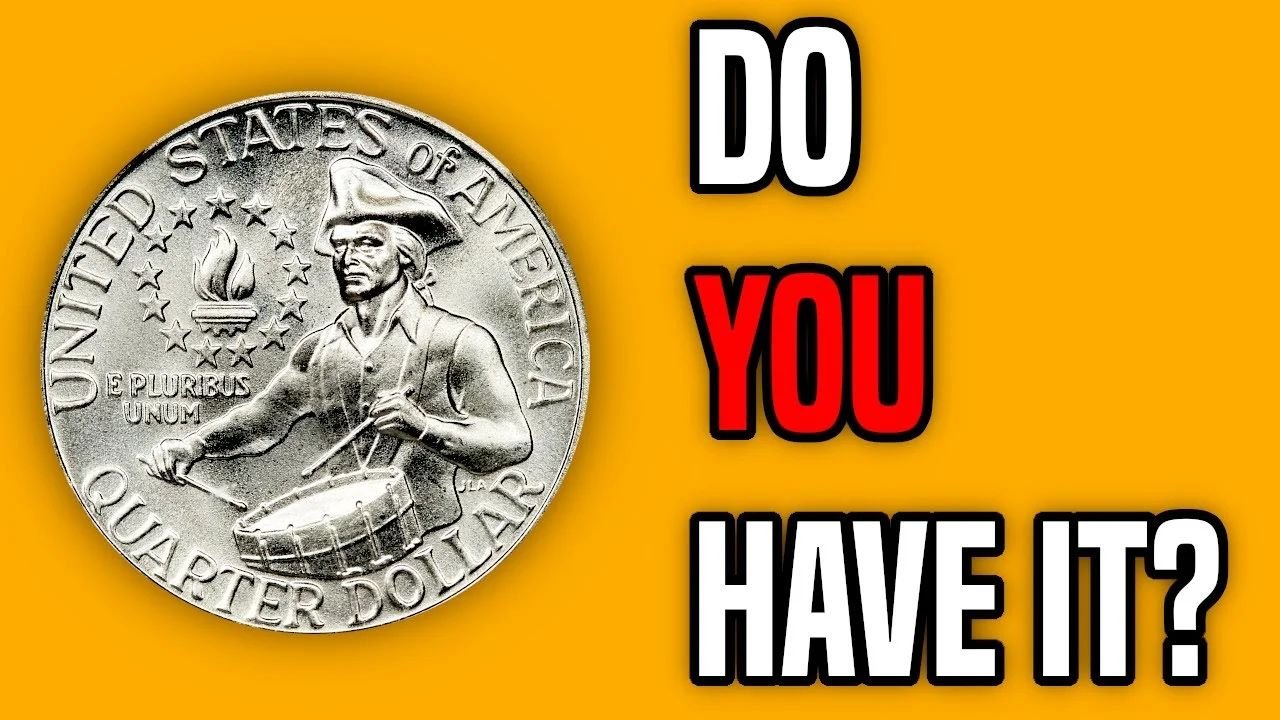

In the fascinating world of coin collecting, few discoveries spark as much excitement as a valuable piece still hiding in plain sight. One such phenomenon is the Rare Bicentennial Quarter, a 1976 coin that was minted in the billions yet may still be worth up to $1 million under the right circumstances. Unbelievable? Perhaps. But for coin collectors and everyday Americans alike, this rare find is the perfect blend of history, mystery, and potentially life-changing value.
The History Behind the Bicentennial Quarter
In 1976, the United States celebrated 200 years of independence. To honor the bicentennial, the U.S. Mint launched special editions of the quarter, half dollar, and dollar coins. Among these, the Bicentennial Quarter stood out for its striking design: instead of the traditional eagle, the coin’s reverse features a colonial drummer boy with a torch encircled by 13 stars—symbolizing the original colonies. Designed by artist Jack L. Ahr, it instantly became a collector’s favorite.
More than 1.6 billion Bicentennial Quarters were produced across the Philadelphia, Denver, and San Francisco mints. Most were minted in a standard copper-nickel clad composition and are still found in circulation today.
What Makes the Rare Bicentennial Quarter Worth $1 Million?
Despite its common design, a Rare Bicentennial Quarter can reach a value of up to $1 million due to a perfect storm of characteristics:
1. Struck on a 90% Silver Planchet
Some Bicentennial Quarters were mistakenly struck on 90% silver planchets typically reserved for collector proof sets. These coins should never have entered general circulation but somehow did, making them exceedingly rare.
2. Mint Errors
These valuable coins often come with minting anomalies like double die errors, off-center strikes, or incomplete planchet strikes. The more distinct the error—and the better the condition—the higher the value.
3. Low Population
Only a handful of these error coins have been authenticated by reputable grading agencies like PCGS and NGC. This extremely low population adds to the appeal and pushes auction prices into the six or even seven-figure range.
4. High Grading Score
To fetch top dollar, the Rare Bicentennial Quarter needs to be in pristine condition—typically graded MS67 or higher (Mint State) or with a deep cameo finish for proofs.
How to Identify a Rare Bicentennial Quarter
Think you might have a Rare Bicentennial Quarter sitting in your change jar? Here’s what to look for:
- Dual Date: The coin should read 1776–1976 under George Washington’s portrait.
- Reverse Design: Look for the iconic drummer boy and the torch encircled by 13 stars.
- Edge Color: If the edge lacks a copper stripe and appears solid silver, it might be struck on a silver planchet.
- Weight Check: A normal clad quarter weighs around 5.67 grams, while a silver version should weigh 6.25 grams.
- Mint Mark: Look under Washington’s portrait. A “S” indicates San Francisco mint, commonly used for proofs.
- Visible Errors: Check for blurry text, doubled images, or off-centered designs.
If any of these factors match your coin, it’s time to get it evaluated by a certified numismatist or a coin grading service.
Also Read – The Legendary Lincoln Wheat Penny: A Coin Worth $37 Million Still Circulating?
Still in Circulation?
Yes, some experts believe a few Rare Bicentennial Quarters may still be circulating in the U.S. economy. That’s part of what makes this story so captivating. These quarters are so familiar—millions of Americans use them daily without realizing their potential value.
Imagine finding one while sorting pocket change, at a garage sale, or even in a forgotten piggy bank. Your next quarter could be a Rare Bicentennial Quarter worth more than your car—or even your house.
Other Valuable Bicentennial Quarter Varieties
While not all Bicentennial Quarters are million-dollar treasures, some can still fetch a decent price depending on their rarity and condition:
- 1976-S Silver Proof Quarters: Minted for collector sets, these are 40% silver but not necessarily rare unless part of an error batch.
- Doubled Die Errors: Look for doubling in letters or digits—these can be worth hundreds to thousands of dollars.
- Uncirculated Mint State Coins: High-grade coins without wear can be valued at $100 to $500.
Recent Auction Highlights
Some Rare Bicentennial Quarters have made headlines:
- A 1976-D silver-clad error quarter sold for $35,000 at auction.
- Another error coin with a deep cameo finish graded PR69 DCAM fetched over $80,000.
- Private sales have reported figures closer to $1 million, though details are often confidential.
These numbers prove that the Rare Bicentennial Quarter is more than just folklore—it’s a very real part of numismatic history.
Tips for Coin Collectors and Curious Citizens
If you want to dive deeper into coin collecting—or just hope to spot a Rare Bicentennial Quarter—here are a few pro tips:
- Always check your change: Especially quarters from the 1970s.
- Use a magnifying glass: Look closely at mint marks and potential errors.
- Weigh your coins: A precision digital scale can help identify silver planchets.
- Don’t clean the coin: Cleaning can reduce value. Leave it in its natural state.
- Get a professional opinion: Certified grading services are the gold standard for authentication.
Why This Coin Matters
Beyond its potential financial value, the Rare Bicentennial Quarter represents a moment in U.S. history. It commemorates 200 years of independence and symbolizes the enduring spirit of a nation. That such a powerful and potentially priceless piece of Americana could still be sitting in someone’s pocket or coin jar is what makes this story so thrilling.
In a world driven by digital currency and contactless payments, this physical token of the past might just become a fortune in the future.
Final Thoughts
The tale of the Rare Bicentennial Quarter teaches us that incredible value can lie in the most ordinary places. Whether you’re a coin enthusiast, a history buff, or simply lucky, you never know what treasure might be hiding in plain sight.
So, next time someone hands you a 1976 quarter, don’t just toss it in with your loose change. Flip it over, examine it closely, and remember—you might just be holding a $1 million coin.
Disclaimer: Coin values fluctuate based on condition, rarity, market demand, and grading. Always consult a certified numismatic expert before buying, selling, or assuming value.
Some Important Link
| Download News APP | Click Here |
| WhatsApp Group | Click Here |
| Home Page | Click Here |