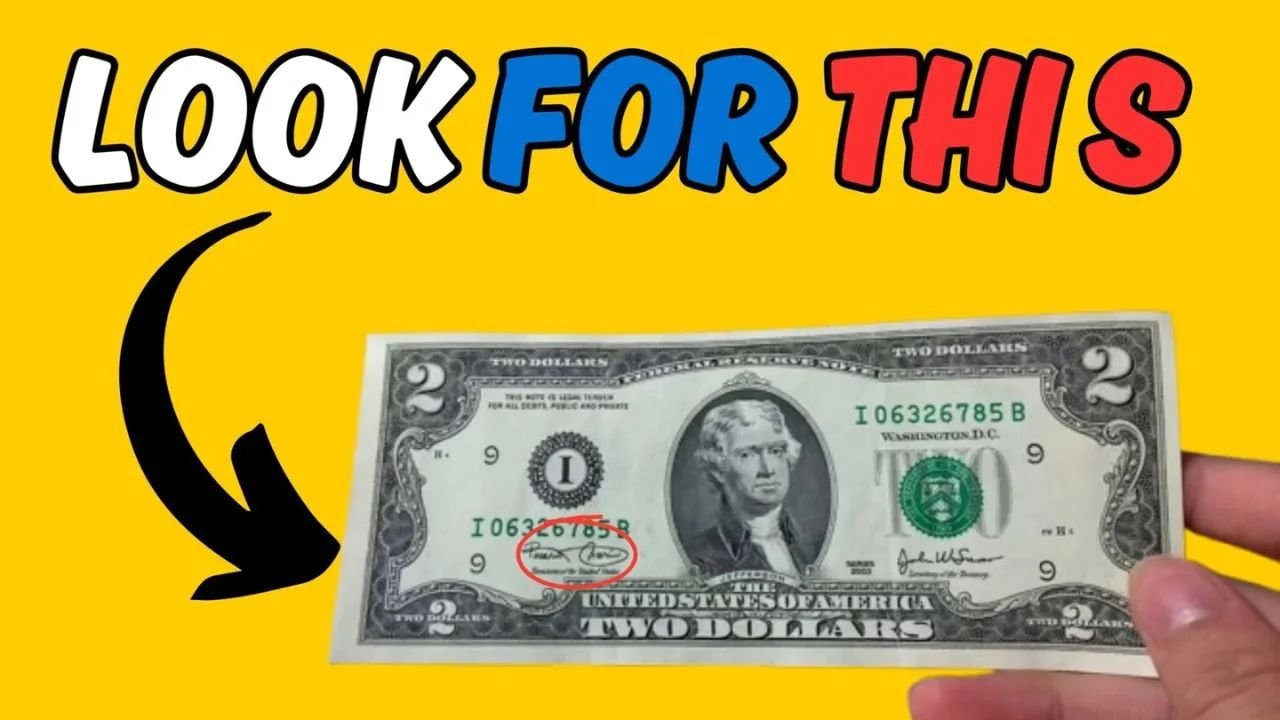

In the fascinating world of rare currency, few denominations have stirred as much interest as the Rare $2 Bill. Often overlooked as a novelty or tucked away in keepsake drawers, these bills carry more historical and collectible value than many people realize. Recently, one Rare $2 Bill, casually given as change at a local gas station, stunned experts when it was appraised at an astonishing $2.612 million. Yes, that simple piece of paper money—long underestimated—is now among the most valuable currency notes in existence.
The Unassuming Hero: The $2 Bill
The $2 bill has long been considered quirky in American currency. Introduced officially in 1862, the denomination never gained widespread popularity, and its limited circulation has often made it seem rare, even when it’s not. However, this recent discovery proves that some variants of the $2 bill are truly rare and immensely valuable.
It all started in a small-town gas station where a customer paid cash and received change that included a crisp, odd-looking $2 bill. The customer, noticing the unusual design and exceptional condition, decided to investigate further—and the results were staggering. That everyday transaction turned out to involve one of the most sought-after bills ever printed.
Why This Rare $2 Bill Is Worth Millions
Not every old $2 bill is worth a fortune. So what sets this particular bill apart? Experts identified a combination of features that elevated its value far beyond expectations:
1. Rare Series and Printing Error
The bill belonged to the 1886 Series, a very early and hard-to-find series in the $2 denomination. What made it even more remarkable was an inverted overprint error, where the serial number and seal were misaligned—an extremely rare printing anomaly that collectors dream about.
2. Extremely Low Serial Number
The serial number on the bill? Just a single digit—00000001. Low serial numbers are like gold dust in the numismatic world, and a single-digit one is incredibly rare, making this Rare $2 Bill even more unique.
3. Gem Uncirculated Condition
Graded Gem Uncirculated 68 by PCGS, the bill was in almost pristine condition—an extraordinary state for a note that’s well over 100 years old. Most bills this age are faded, torn, or damaged, making the condition of this one exceptional.
4. Historical and Artistic Significance
The 1886 $2 bill features ornate engraving and a distinctive design that reflects the rich history of American financial printing. It’s not just money—it’s a piece of art and a relic of America’s economic past.
A Quick Look at Other Valuable $2 Bills
Here’s a list of other Rare $2 Bill editions and their estimated market values:
| Series Year | Seal Color | Notable Feature | Estimated Value |
|---|---|---|---|
| 1862 | Red | First $2 bill issued | $500 – $2,800 |
| 1869 | Red | Thomas Jefferson portrait | $3,800+ |
| 1890 | Brown | Treasury Note with General McPherson | $4,500 – $10,000+ |
| 1928 | Red | First modern $2 with Monticello | $5 – $1,000+ |
| 1953 & 1963 | Red | Common but collectible | $5 – $20 |
| 1976 | Green | Bicentennial edition | $20 – $900+ |
While most of these aren’t worth millions, their collectible nature means they’re often valued well above face value—especially in good condition or with unusual serial numbers.
Also Read – The $50,000 Kennedy Coin Found in Grandpa’s Toolbox: A Hidden Treasure Story
A Collector’s Dream in Everyday Change
What makes this story so captivating is the ordinary setting in which the bill was discovered—a gas station. Unlike ultra-rare collectibles locked away in private vaults, this Rare $2 Bill was in everyday circulation. It wasn’t found at an auction or antique shop; it was handed over as change during a regular transaction.
This discovery has reignited interest among collectors and casual observers alike. After all, if one person found such a gem in a common setting, who’s to say others aren’t still out there?
Could You Be Holding a Rare $2 Bill?
Want to know if you might be sitting on a goldmine? Here are some key identifiers of a valuable Rare $2 Bill:
- Series Year: Bills from 1862, 1869, and 1886 are among the most valuable.
- Printing Errors: Misprints, off-center seals, or double serial numbers greatly increase value.
- Serial Numbers: Extremely low or fancy serial numbers like “00000001” or “12345678” are collector magnets.
- Condition: Crisp, clean, uncirculated bills are worth significantly more than worn ones.
- Seal Color: Red or brown seals (used in older series) generally indicate older, more collectible versions.
Expert Authentication is Key
Before getting too excited, remember that proper authentication is critical. Many bills look unique or old but aren’t worth much. Always consult a certified numismatist or a grading agency like PCGS or PMG to verify a bill’s authenticity and value.
These professionals evaluate key aspects such as paper quality, ink, printing alignment, and serial accuracy before assigning a value grade. This not only gives credibility but also helps if you decide to sell the bill at auction or privately.
A Reminder: Value Can Be Hiding in Plain Sight
The story of this Rare $2 Bill valued at $2.612 million is more than just a fun fact—it’s a lesson. Treasures don’t always look like treasures. They can be slipped into your hand as change, hidden in a family Bible, or tucked in an old wallet.
It reminds us to look a little closer at the small things. While not every $2 bill will be a jackpot, the possibility is what keeps numismatics exciting and personal.
Final Thoughts
In an age of digital payments and plastic money, paper currency is becoming less common—but that just makes discoveries like this even more thrilling. The Rare $2 Bill found in a gas station might be a once-in-a-lifetime occurrence, but it proves that treasures can still be found in the most unexpected places.
So the next time you’re handed change, don’t just slide it into your wallet. Take a second look. Your next fortune might be hiding right there in that Rare $2 Bill.
Some Important Link
| Download News APP | Click Here |
| WhatsApp Group | Click Here |
| Home Page | Click Here |