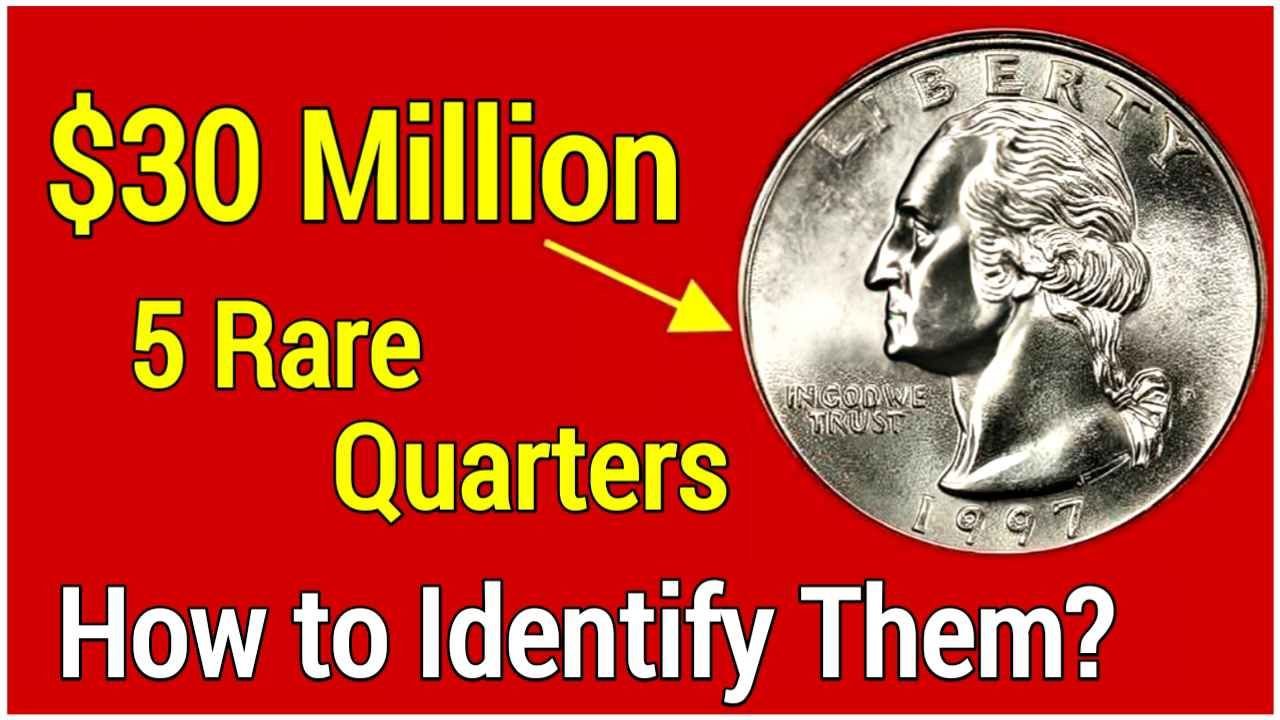

Have you ever taken a second look at the quarters sitting in your coin jar or change pocket? You might be sitting on a small fortune and not even realize it. Some Rare Quarters are worth tens of thousands—some even millions—thanks to their rarity, minting errors, or historical value. That’s not a fantasy. For collectors and lucky finders alike, certain quarters have changed lives.
This article reveals five of the most sought-after Rare Quarters in U.S. coin history—collectively valued at nearly $30 million. You’ll also learn how to identify these special coins and how to determine if that 25-cent piece in your drawer could be a treasure in disguise.
Quick Look: Top 5 Rare Quarters That Could Make You Rich
| Quarter Type | Year | Estimated Value | Unique Feature | Mint Mark Location |
|---|---|---|---|---|
| 1796 Draped Bust Quarter | 1796 | $1 million+ | First U.S. quarter ever made | Below eagle on reverse |
| 1916 Standing Liberty Quarter | 1916 | $30,000–$100,000 | Ultra-low mintage | Left side of obverse |
| 1932-D Washington Quarter | 1932 | $20,000–$80,000 | Rare Denver mint | Below wreath |
| 1950-D/S Overmint Mark Quarter | 1950 | $25,000–$70,000 | Minting error (D over S) | Right of Washington |
| 2004 Wisconsin Extra Leaf Quarter | 2004 | $5,000–$15,000 | Extra leaf error | Lower left of corn on reverse |
1. 1796 Draped Bust Quarter – The First of Its Kind
The 1796 Draped Bust Quarter holds an elite place in numismatic history. As the first quarter ever minted by the U.S. Mint, it’s not just old—it’s groundbreaking.
How to Identify It:
- Lady Liberty with flowing hair on the obverse
- 15 stars symbolizing the original states
- Small eagle on the reverse
- Smooth edges (no reeding)
With only around 6,000 minted and fewer than a few hundred surviving today, even a worn specimen is valued at over $100,000. In pristine condition, these Rare Quarters can sell for well above $1 million at major auctions.
2. 1916 Standing Liberty Quarter – A Short-Lived Legend
The 1916 Standing Liberty Quarter is a gem from the early 20th century. This quarter was produced for only part of the year before a design change took place, resulting in a mintage of just 52,000 coins.
How to Spot It:
- Liberty standing between two pillars
- Shield in her left hand, olive branch in her right
- No stars under the eagle on the reverse
- Clear date on the lower front side
Due to its limited release and historic design, this quarter often fetches between $30,000 and $100,000, depending on condition. It’s one of the most desirable Rare Quarters ever made.
3. 1932-D Washington Quarter – A Depression-Era Rarity
Introduced during the Great Depression, the 1932-D Washington Quarter marked the beginning of a new era in American coinage. But thanks to economic turmoil, few were minted in Denver—making it a rare and valuable coin today.
How to Spot It:
- Washington’s portrait on the obverse
- “D” mint mark beneath the eagle on the reverse
- Classic silver tone, especially in uncirculated versions
These Rare Quarters can sell from $20,000 to over $80,000. Collectors prize them as key pieces in completing a full Washington quarter collection.
Also Read – $1312 Stimulus Checks 2025: Full Guide to Alaska’s PFD, Eligibility, Dates & Benefits
4. 1950-D/S Overmint Mark Quarter – A Collector’s Dream Mistake
Sometimes errors are worth more than perfection. In 1950, a Denver-minted quarter was mistakenly struck over a San Francisco coin, creating what’s now known as a D/S overmint mark.
How to Spot It:
- Inspect the mint mark to see a faint “S” under the “D”
- Use a coin magnifier or microscope for best results
- Slight misalignment or doubling of the mint mark
This unique coin is one of the most prized Rare Quarters among error collectors. Depending on its condition, it could fetch between $25,000 and $70,000.
5. 2004 Wisconsin Extra Leaf Quarter – A Modern-Day Marvel
Yes, even modern coins can be worth thousands. The 2004 Wisconsin State Quarter featured an unusual minting error in its design—a misplaced leaf on the corn stalk on the reverse side.
How to Spot It:
- Look closely at the left side of the corn
- Variants: “Extra Leaf High” or “Extra Leaf Low”
- Error leaf will look like it’s poking out unnaturally
Even though it’s from recent circulation, these Rare Quarters have sold for $5,000 to $15,000 depending on condition. That’s quite a return for a coin minted in the 21st century.
How to Identify Valuable Quarters
You don’t have to be a professional numismatist to spot Rare Quarters. Here’s a checklist to help you get started:
✅ Look at the Date
Older coins, especially those before 1965, have better odds of being valuable, especially if they contain silver.
✅ Check Mint Marks
- “D” = Denver
- “S” = San Francisco
- “P” = Philadelphia (often unmarked in older coins)
Unusual mint marks—or errors involving them—can drastically increase value.
✅ Spot Minting Errors
- Doubling or “ghost” images
- Off-center prints
- Wrong planchet (coin blank) used
- Extra or missing elements in design
✅ Use Tools
- Magnifying glass (10x zoom or better)
- Accurate coin scale (authentic silver quarters weigh 6.25g)
- Good lighting
Even a tiny error can mean the difference between face value and a fortune.
Where to Sell Rare Quarters
If you believe you’ve discovered one of these Rare Quarters, your next step is crucial. Don’t rush. The way you sell it can significantly affect how much you earn.
Here’s What to Do:
- Get an appraisal from a certified coin dealer
- Join online numismatic forums for expert opinions
- Attend coin shows to meet collectors and dealers
- Use auction houses like Heritage Auctions or Stack’s Bowers
- Consider grading by services like PCGS or NGC to authenticate and certify value
Avoid pawn shops or general reselling platforms like eBay until you know what you have. Professionals will help you get the best value for your Rare Quarters.
Frequently Asked Questions About Rare Quarters
Q1: Can I still find Rare Quarters in my change?
Yes, especially modern rarities like the 2004 Wisconsin Extra Leaf Quarter. While uncommon, people have discovered valuable coins in circulation, bank rolls, and old piggy banks.
Q2: Are silver quarters always worth more?
Quarters minted before 1965 are 90% silver. Even common ones are worth more than face value due to silver content. Combine that with rarity, and you may have a serious asset.
Q3: Should I clean my old coins before selling?
No. Never clean your coins. It can significantly reduce their value. Collectors prefer coins in original, untouched condition—even if they appear dirty or tarnished.
Q4: How can I tell if I have a mint error?
Compare your coin to a verified version online, or use a professional grading service. Mint errors are extremely specific and require expert evaluation.
Q5: Is it worth collecting modern quarters?
Absolutely. Several state and commemorative quarters, like the Wisconsin Extra Leaf, are already valuable due to unexpected errors. Collecting modern coins can pay off in the long run.
Final Thoughts: Don’t Overlook Your Spare Change
It’s easy to overlook the coins in your pocket. But as this guide shows, even the smallest denominations can hide tremendous value. From historic coins like the 1796 Draped Bust to modern surprises like the 2004 Wisconsin quarter, Rare Quarters are treasures waiting to be found.
So next time you get change from the store or clean out your couch cushions, give your quarters a closer look. You just might be holding a fortune in your hands without even knowing it.
The world of Rare Quarters is full of surprises—and the next big discovery could be yours.
Some Important Link
| Download News APP | Click Here |
| WhatsApp Group | Click Here |
| Home Page | Click Here |